


Food Allergy Center
A full range of treatment options, from testing to desensitization, tailored to each patient's needs.
We offer comprehensive evaluation and discussion of food allergy treatment options including:
- Diagnostic skin testing and biologics (Xolair)
- Oral food challenges and oral immunotherapy (OIT)
- Sublingual immunotherapy (SLIT)
We also offer avoidance counseling to help patients and families choose the approach that best fits their needs.
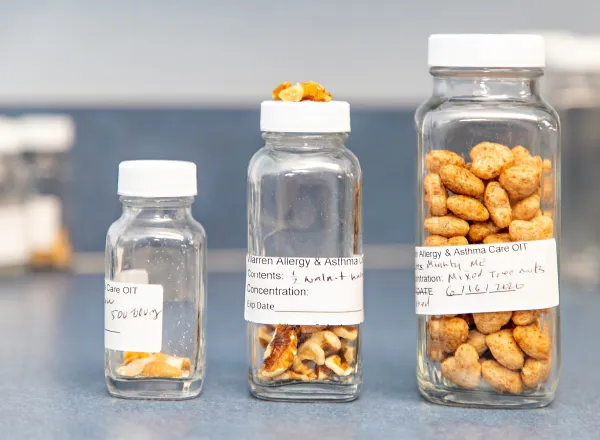
We currently have an allergy desensitization protocol for patients allergic to peanuts, tree nuts (cashew, walnut, pecan, almond, pistachio, hazelnut), sesame seed, egg, milk, soy, and wheat but can customize the program to many other foods.
Oral Immunotherapy (OIT)
for Food Allergies
A Proven Approach to Food Allergy Desensitization
Living with a food allergy can be stressful and disruptive. Constant label reading, fear of accidental exposures and anxiety about allergic reactions can affect the daily life of both the patient and their family.
Oral Immunotherapy (OIT) is an innovative treatment designed to help reduce the risk of severe reaction from accidental food exposures. Depending on individual circumstances some patients may elect to go beyond just protection from small amounts of accidental exposure all the way to eating a normal serving size of the food with no symptoms.
We find that the earlier we can intervene the better the chance of becoming truly tolerant of the food they are allergic to. We start patients as young as 10 months of age.
Currently we offer oral immunotherapy for peanut, tree nuts (cashew, walnut, hazelnut, pistachio, pecan and almond), sesame seed, milk, egg, soy, and wheat. We consider ourselves creative doctors that think "outside the box" and can customize a protocol of various other foods if needed.
How Does OIT Work?
OIT is performed in several phases.
First Dr. Krasnick or Dr. Linden will meet with you or your child and take a detailed history and physical exam. Skin testing for the suspect food(s) is typically done on the first visit to confirm the diagnosis and to discuss if OIT is appropriate.
Escalation Day
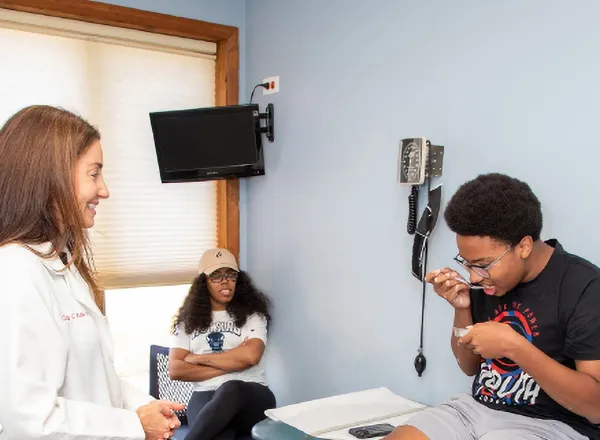
On the first visit patients are given very small amounts of the food they are allergic to. Several doses may be given every 20-30 minutes under medical supervision. This visit can take 2-3 hours. At the end of the visit the best tolerated dose is given to the patient to take at home, daily for the next 2-3 weeks.
Up Dosing
After the initial escalation day, the patient returns to the office and the doctor reviews how the past few weeks have gone and determines the next dose. The dose is given in the office and the patient is observed for 45 minutes. If there are no issues they are sent home with a 2-3 week supply of the dose tolerated in the office.
Up Dosing appointments are repeated every 2-3 weeks until the target dose is reached. For patients that just wish to be able to eat foods that may contain a cross contaminant or tolerate a bite of food that contains the suspect food, it will take at least 10-12 sessions to reach this goal. For patients that wish to ingest larger amounts it will take longer.
The patient then remains on the target dose and is retested in 6 to 12 month intervals thereafter. In general patients must continue to ingest the food on a regular basis to maintain the desensitization. The actual amount and frequency of ingestion is based on shared decision making between the patient and the doctor.
Sublingual Immunotherapy (SLIT)
for Food Allergies
A Gentle Approach to Food Allergy Treatment
Sublingual immunotherapy (SLIT) is an emerging treatment option for certain food allergies. SLIT works by placing a very small amount of an allergenic food extract under the tongue on a regular basis. Over time, the immune system may become less sensitive to the food, helping reduce the risk of allergic reactions from accidental exposures.
This approach uses smaller doses of food and has a very low allergic reaction rate. It also does not require one to avoid exercise before or after the dose. Maintenance doses can also be achieved quickly in 4-6 sessions.
How Does SLIT Work?
During SLIT treatment, tiny amounts of the allergenic food are administered under the tongue, typically for 1-2 minutes, then swallowed. Because this requires some cooperation it may not be suitable for babies but can be started in some young toddlers.
The goal of SLIT is not necessarily to allow unrestricted consumption of the food, but rather to increase the threshold at which a reaction occurs and provide additional protection against accidental exposure. SLIT can also be used as a bridge to OIT, where higher amounts of food are ingested, in a highly sensitive patient.
Potential Benefits of SLIT
- Uses very small doses of allergen
- Generally associated with fewer systemic reactions than oral immunotherapy
- Easy daily administration at home after initial supervised dosing
- May provide protection against accidental exposures
- Can improve quality of life for patients and families living with food allergies
SLIT vs. Oral Immunotherapy (OIT)
Both SLIT and OIT are forms of food allergy desensitization. OIT typically uses larger doses of food protein and may achieve higher levels of protection, while SLIT often uses much smaller doses and may offer a favorable safety profile.
The best treatment option depends on the patient's age, allergy history, lifestyle, goals, and risk factors. Our team will discuss the advantages and limitations of each approach to help guide your decision.
Why Choose Warren Allergy & Asthma Care
for Food Allergies?
Our practice specializes in the diagnosis and management of food allergies. We provide personalized treatment plans, careful monitoring, and ongoing support throughout the desensitization process.
If you or your child has a food allergy and would like to learn more about oral immunotherapy (OIT) or sublingual immunotherapy (SLIT), contact Warren Allergy & Asthma Care to schedule a consultation and discuss whether this treatment may be appropriate for you.